
How to Let Go
by Gisela Garcia
Being an actor comes with constant contradictions. Stanislavsky says to draw on real-life experiences to evoke an emotional or physical response. Meisner counters with the argument that one should focus only on reacting to their scene partner and imagining oneself under the circumstances of the situation. There are thousands of different takes on how to act, but one question still widely remains unanswered. Not for lack of trying, but simply because it goes against human nature:
How do you let go?
How do you leave your character at the door? How can you walk away from grief or love or anger condensed beneath spotlights and “wash it off”? Actors are expected to experience what’s happening onstage as authentically as possible, while still acutely aware of the task at hand, and then completely allow it to dissipate the second we get off stage.
Spring Awakening has marked a complete shift in my life. Wendla Bergman doesn’t have very much meat to chew on in the script, but what she does have has made a home just beneath my skin. Going into the process, I’d tell myself constantly, “It’s just a job. It’s just blocking. It’s just words on a page.” Still, though, there isn’t enough logic in the world to dismiss what my body is wholeheartedly experiencing— all the want and sadness and frustration and love.
Wendla goes through a drastic change in perspective throughout the course of the musical. Her gentle curiosity and faith offer such an ease, even when she’s frustrated or confused, and those soft traits are what she takes to her grave. She experiences her loss of childhood and the complete deconstruction of what she thought her God was in mere moments, and then she’s gone.
So, the question remains: When I walk out through the TheatreThree doors, how do I lay her down to rest? Closure practices only do so much, and they don’t protect you from the overwhelming quiet on the car ride home.
Clearly, I’m still trying to work it out. However, I’ve found that I identify strongly with Wendla, and I believe that my biggest mistake has been trying to shut her out completely as soon as we’ve taken our bow. Shutting her out is shutting out those parts of myself that offer the levity so desperately needed in the show. All of Wendla comes, in some form or fashion, from me— including the curiosity, the hope, the desire.
I refuse to believe that that’s a bad thing, that aligning deeply with a role and acknowledging it will leave you worse off. Experts may argue about every single aspect of acting, but our job is simple. For a fleeting moment, for only a few hours, we are the pieces of what’ll come to be a story that the audience can take with them. Being aware of why you’re so deeply affected even offstage is important, and most of the time, it’s because we’re caught between different versions of us. But they’re still us.
All of that to say, you don’t let go. Wendla will walk on my arm for a very long time, reminding me to touch the flowers and cloud-gaze.
When time’s passed and the seasons have changed, she’ll settle into my bones once again, and my curiosity, my faith, and my hope for a new life will return to exactly that:
Mine, as they always had been.
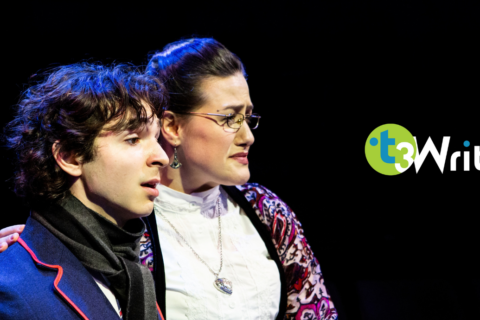
by Kyle Hughes
Spring Awakening has made three significant appearances in my life. The musical opened on Broadway then toured to the…

By
Carson Wright
Many years ago, I visited the Theatre Department of Pace University for a weekend of events designed to appeal to…